
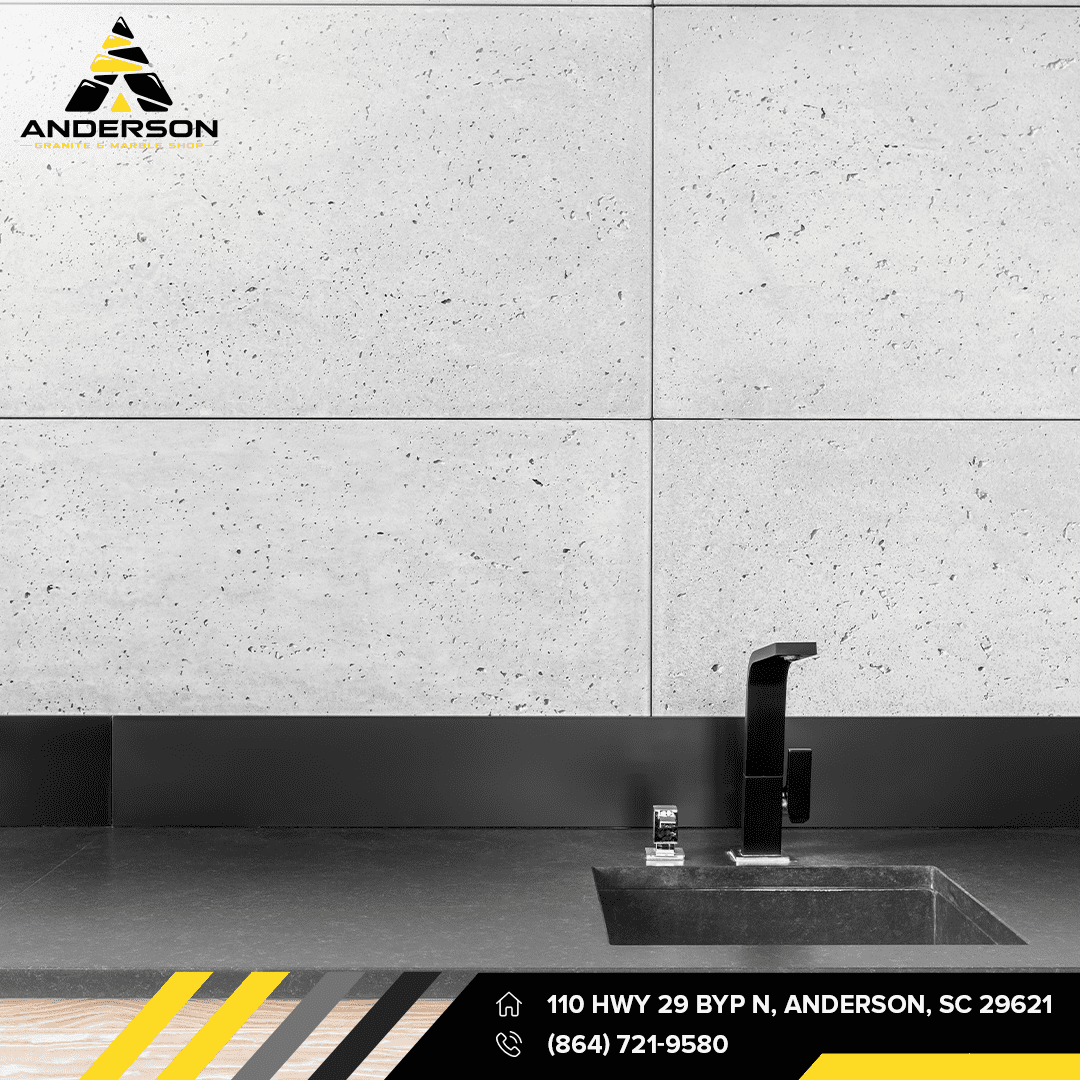
Granite countertops in Anderson have become increasingly popular due to their durability, resistance to heat and scratches and ability to enhance the overall aesthetic of any kitchen or bathroom. However, like any natural stone, granite is susceptible to staining if not properly cared for. Understanding the reasons behind granite staining and implementing preventive measures can help maintain the pristine appearance of these countertops for years to come.
Why Granite Countertops Stain:
- Porosity: Despite its dense composition, granite is a porous material. This means that it has tiny spaces or pores within its surface, which can absorb liquids and substances that are left sitting for an extended period.
- Acidic Substances: Granite is sensitive to acidic substances like lemon juice, vinegar, wine, and certain cleaning agents. When these liquids come into contact with the granite surface, they can react and cause etching or discoloration.
- Oils and Grease: Oily substances can penetrate the granite’s pores, leaving behind stains that are challenging to remove.
- Prolonged Exposure: If spills or substances are left unattended on the countertop for an extended period, the chances of staining increase significantly.
How to Prevent Staining:
- Sealing the Granite: Applying a high-quality sealant to granite countertops is one of the most effective ways to prevent staining. The sealant acts as a protective barrier, reducing the stone’s porosity and minimizing the chances of liquid absorption. Over time, the sealant on granite countertops may wear off. To ensure continuous protection, reapply the sealant as per the manufacturer’s recommendations.
- Wipe Spills Immediately: Accidents happen, but it’s essential to wipe any spills promptly. Use a soft cloth or paper towel to avoid scratching the surface, and gently blot the area instead of rubbing. Remember, prolonged exposure to water can cause watermarks and stains.
- Avoid Acidic Cleaners: When cleaning granite countertops, steer clear of acidic or harsh chemical cleaners. Instead, use a mild dish soap mixed with warm water or a specialized granite cleaner approved for the stone.
- Use Cutting Boards and Trivets: To protect the granite from scratches and heat damage, always use cutting boards for chopping and trivets or hot pads for placing hot cookware.
Granite countertops in Anderson Granite & Marble Shop offer a sophisticated touch to any space. Understanding the reasons behind granite countertop staining and adopting preventive measures can ensure the longevity and pristine appearance of these elegant surfaces.